All research

Research theme 3

Antimicrobial Resistance and Alternative Antimicrobials

We use cell-free systems to measure how antibiotics work and how bacteria resist them, and to test alternative antimicrobials.

Bacteria keep evolving resistance to antibiotics, so we need fast ways to measure resistance and new kinds of antimicrobial. Cell-free protein synthesis gives us a rapid tool for both.

We have built cell-free systems from laboratory and clinical isolates of Klebsiella pneumoniae and used this tool to measure antibiotic potency using the native metabolome and proteome of this host. As an example, one single point mutation in the RNA polymerase gene, RpoB H526L, raised cell-free resistance to rifampicin 58-fold. While cell extract preparation require Biosafety Level 2, the final extract is non-living and suitable for study in a Biosafety Level 1 laboratory.

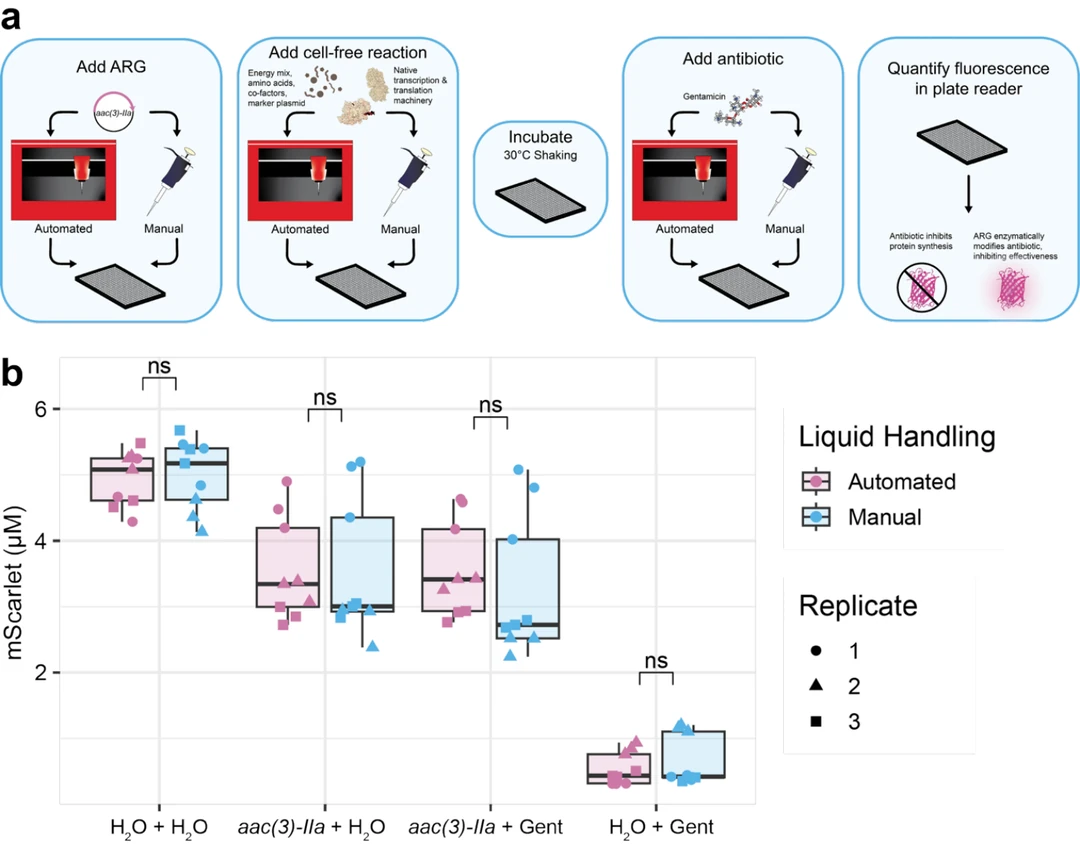
With the UK Health Security Agency (UKHSA), we have adapted the approach to study resistance genes. A semi-automated workflow on a benchtop liquid-handling robot showed that the gene aac(3)-IIa raised the gentamicin IC50 by over 150-fold, and arr-3 raised the rifampicin IC50 by about 20-fold.

Our BBSRC-funded collaboration with UKHSA also aims to explore alternative antimicrobials, including antimicrobial peptides and engineered variants. The cell-free platform lets us assess new compounds quickly, and we study how resistance evolves in ESKAPE pathogens such as Klebsiella pneumoniae.

Platform technology: our cell-free antimicrobial profiling system tests compounds in a host-specific setting and speeds up the discovery and optimisation of new antimicrobials, including natural and engineered peptides.
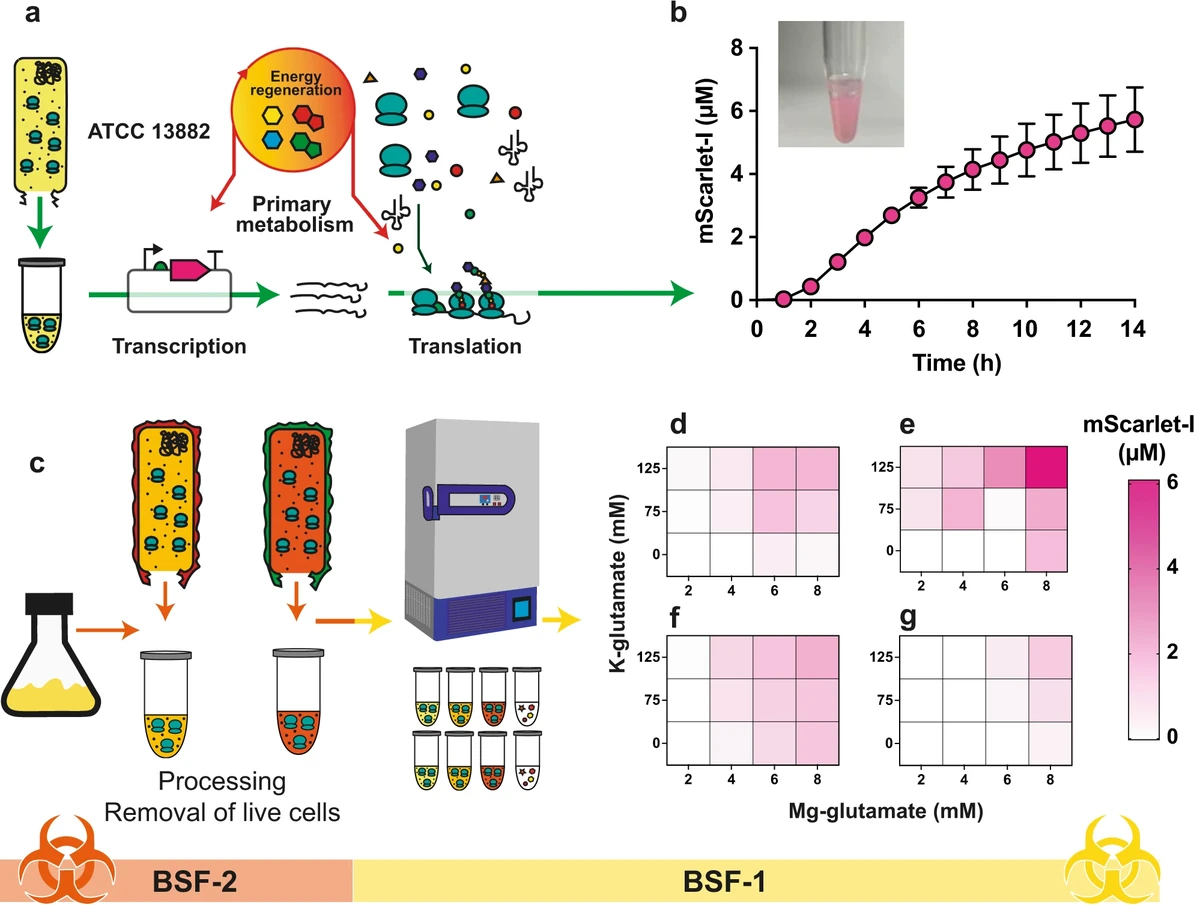
Figure showing a cell-free expression workflow for resistance enzymes, an mScarlet-I time course, and heat maps of enzyme activity across glutamate conditions.
Figure from Chengan et al., npj Antimicrobials and Resistance (2023). doi:10.1038/s44259-023-00018-z (opens in a new tab)

Key numbers

  • Level 1biosafety level for finished K. pneumoniae cell extracts, which are non-living. Making them needs Level 2.
  • 14 to 16 hof activity in our K. pneumoniae reactions, whilst new cell-free systems are usually active for only 2 to 6 hours
  • 384unique 15 µL cell-free reactions on a single plate, set up by our benchtop liquid-handling robot

Sources: Chengan et al., npj Antimicrobials and Resistance (2023) (opens in a new tab) and Bergum et al., Synthetic Biology (2026) (opens in a new tab).

Why it matters

Why this matters

  • 4.71 milliondeaths associated with bacterial antimicrobial resistance in 2021, including 1.14 million directly attributable
  • 1.91 milliondeaths attributable to resistance forecast for 2050, with 8.22 million associated

GBD 2021 Antimicrobial Resistance Collaborators. The Lancet (2024) 404:1199-1226 (opens in a new tab)

Selected publications

Each entry links to the paper, its Altmetric record and a live citation count.

  • Publication 30

    Molly Bergum, Sahana Suthakaran, Bethany Martin, J. Mark Sutton, Simon J. Moore

    A liquid handling platform for standardized quantification of cell-free enzymatic activity encoded by antimicrobial resistance genes

    Synth. Biol. (2026) 11:ysag010

    Workflow diagram and box plot. The diagram shows five steps in rounded boxes: add an antimicrobial resistance gene plasmid, add the cell-free reaction, incubate at 30 degrees Celsius with shaking, add antibiotic, and quantify fluorescence in a plate reader, with an automated liquid handling robot and a manual pipette shown as alternatives for each addition. Below it, a box plot of mScarlet concentration for four reaction mixtures shows no significant difference between automated and manual pipetting.
  • Publication 29

    Sebastián Bermúdez-Puga, Bruno Mendes, Jean Pierre Ramos-Galarza, Pamela Oliveira de Souza de Azevedo, Attilio Converti, Francesco Molinari, Simon J Moore, José R Almeida, Ricardo Pinheiro de Souza Oliveira

    Revolutionizing agroindustry: Towards the industrial application of antimicrobial peptides against pathogens and pests

    Biotechnology Advances (2025) 82:108605
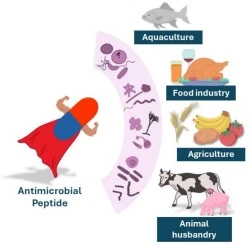
    Illustration of an antimicrobial peptide as a superhero, with applications in aquaculture, the food industry, agriculture and animal husbandry.
  • Publication 26

    Sebastián Bermúdez-Puga, Meriellen Dias, Iara Lima Reis, Taciana Freire de Oliveira, Sonia Regina Yokomizo de Almeida, Maria Anita Mendes, Simon J Moore, José R Almeida, Carolina Proano-Bolanos, Ricardo Pinheiro de Souza Oliveira

    Microscopic and metabolomics analysis of the anti-Listeria activity of natural and engineered cruzioseptins

    Biochimie (2024) 225:168-175

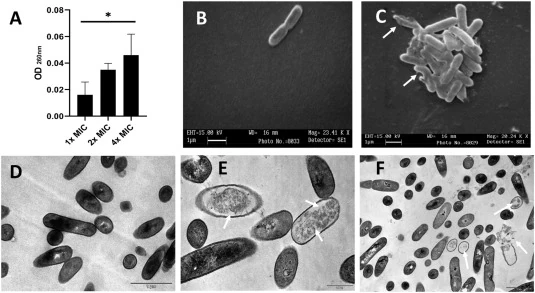
    Bar chart of bacterial growth and electron micrographs of Listeria cells treated with cruzioseptin peptides.
  • Publication 25

    Kameshwari Chengan, Charlotte Hind, Maria Stanley, Matthew E Wand, Lakshmeesha K Nagappa, Kevin Howland, Tanith Hanson, Rubén Martín-Escolano, Anastasios D Tsaousis, José A Bengoechea, J Mark Sutton, Christopher M Smales, Simon J Moore

    A cell-free strategy for host-specific profiling of intracellular antibiotic sensitivity and resistance

    npj Antimicrobials and Resistance 1:16 (2023)
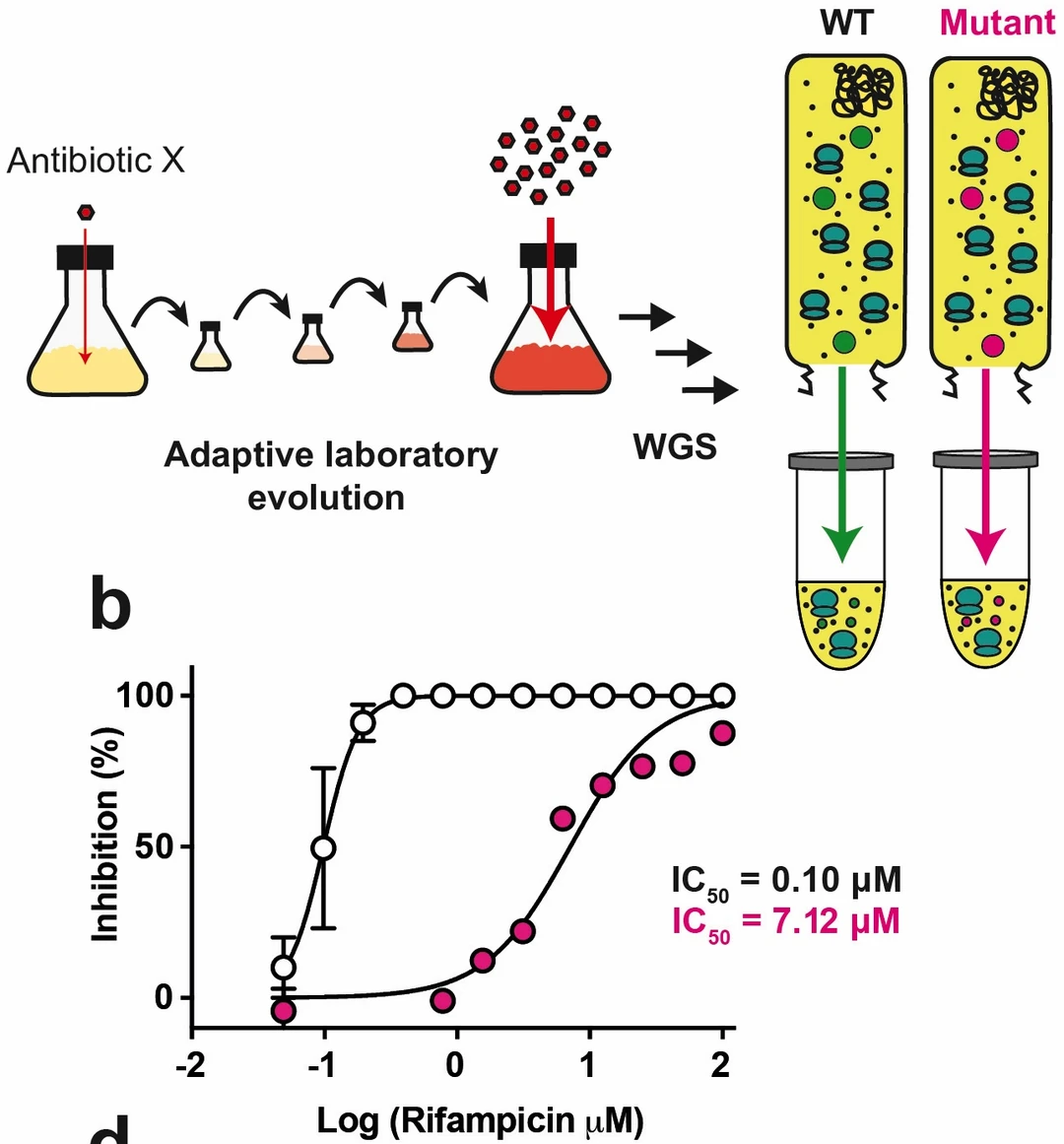
    Workflow of adaptive laboratory evolution of antibiotic resistance with whole-genome sequencing, and a cell-free assay showing how rifampicin inhibits wild-type and mutant enzyme.
  • Publication 3

    Molly Bergum, Bethany Martin, J. Mark Sutton, Simon J. Moore

    A semi-automated cell-free protein synthesis workflow for quantifying antibiotic-inactivating enzymes

    Methods in Enzymology (2026) DOI: 10.1016/bs.mie.2026.09.046

More from this theme (1)
  • Publication 28

    Andrew J. Rice, Tien T. Sword, Kameshwari Chengan, Douglas A. Mitchell, Nigel J. Mouncey, Simon J. Moore and Constance B. Bailey

    Cell-free synthetic biology for natural product biosynthesis and discovery

    Chemical Society Reviews (2025) 54:4314-4352

All publications

More research themes

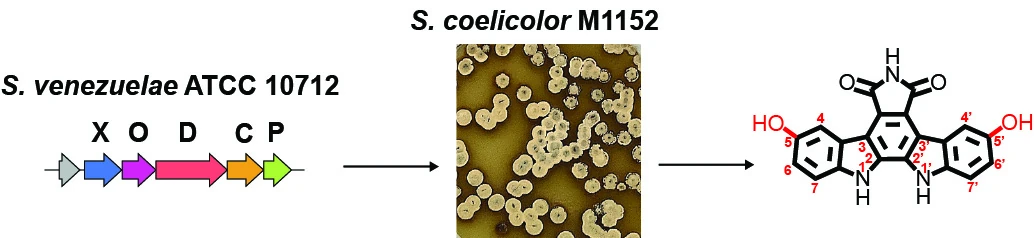
Figure from the arcyriaflavin F paper: the biosynthetic gene cluster in Streptomyces venezuelae, a plate of Streptomyces coelicolor M1152 colonies, and the structure of arcyriaflavin F.

Theme 1

Synthetic Biology for Natural Products

We engineer Streptomyces bacteria to discover and make new bioactive molecules, from single enzymes to complete pathways.
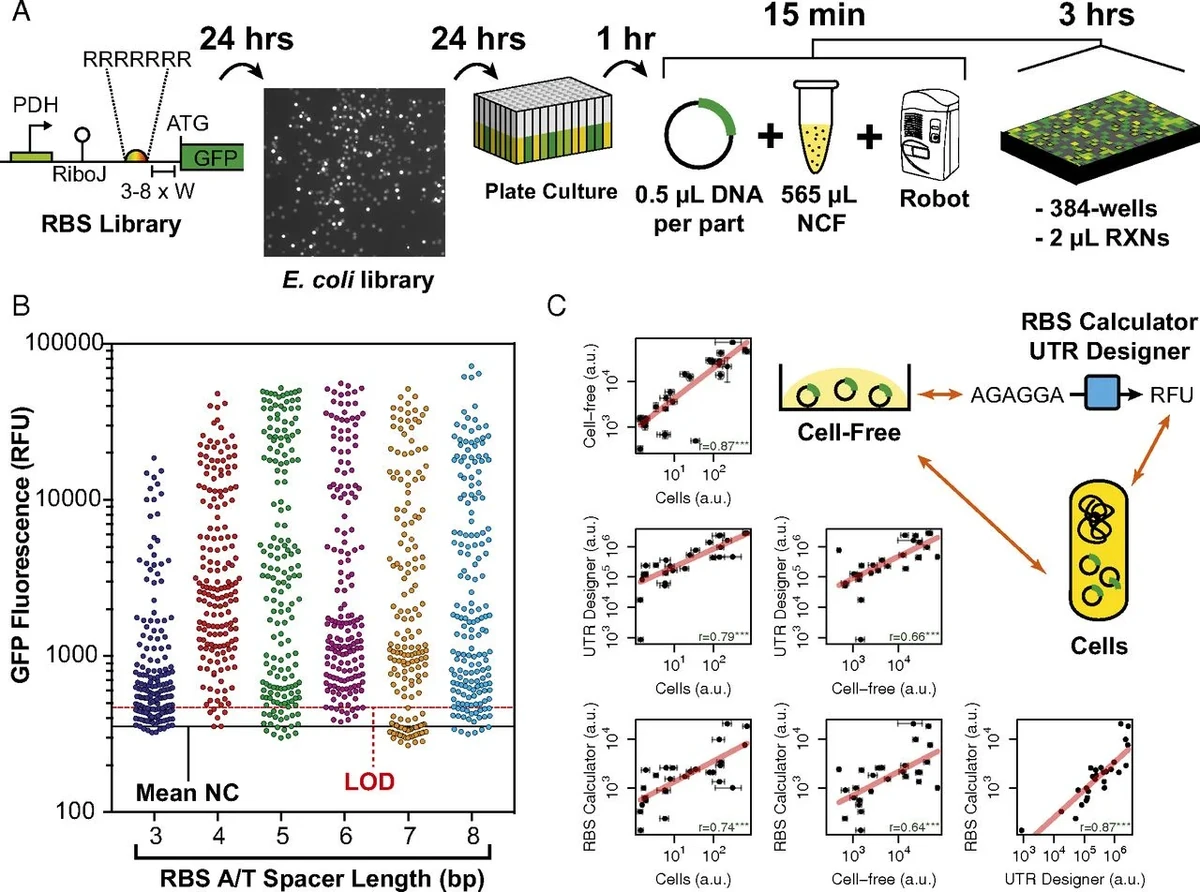
Figure showing a ribosome binding site library workflow, GFP fluorescence by spacer length, and comparisons of cell-free expression with predicted values.

Theme 2

Cell-free Synthetic Biology

We build high-yielding cell-free systems from diverse bacteria to make peptides, proteins and small molecules, and to prototype pathways fast.

Work with us

We welcome enquiries from prospective students and fellows, and from industry and public-sector partners.

Join usContact details